The Leader and Time
Managing in a Time That Escapes Us
With Pauline Bebe, France’s first woman rabbi: how can we live serenely in a time that escapes us?
with Pauline Bebe, France’s first woman rabbi
How can we live serenely in a time that escapes us, and that is understood differently from one country and culture to another? Should we really “let go” and, if so, when, and of what?
Time that escapes us makes us suffer because it condemns us to be dispossessed of ourselves. We should not cling to time but take hold of it again. The only possible way is to reclaim what we do: to feel ourselves doing, acting, at work, recognised. This “feeling” is a sensitive form of awareness that confirms, through the senses and the mind, that we exist as we act. It is about feeling ourselves at work while feeling ourselves exist.
Responding with more control?
When we feel we are losing control, our first reflex is to tighten it. For the organisation, this always means more transparency, reporting, deadlines and determination to hold on “whatever happens” in a time that escapes us, and in which others escape us too. The inflation of processes and controls of every kind becomes the system’s anxious and desperate response to the people who work for it. Each of us must question our own anxiety to know everything, foresee everything and, in the end, never trust.
Leaning on the other
Let us take hold of time by putting the singular, unique person at the heart of our actions. Not only diversity as a value to develop, but also and above all the recognition of each person. Let us address our teams, for example, individually, personally, courteously*. In an anonymous world, let us restore the personal call.
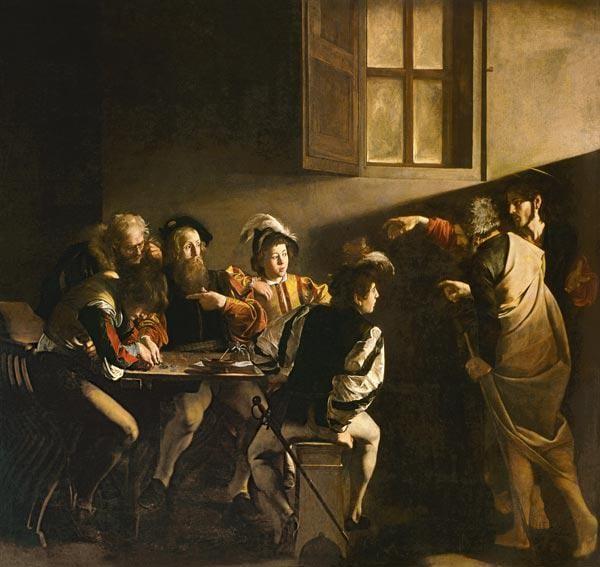
Feeling called: called to respond, to contribute, to cooperate, to innovate. As in Caravaggio’s The Calling of Saint Matthew, we must restore this time of the other, where each person feels that they are the one being addressed.
*Today our inbox has replaced the space around the coffee machine. So let us avoid group emails and turn our messaging into a place of warm exchange and reciprocity. Digital coldness is no more welcome than cold coffee.
“To approach someone, you must first call them, by their name if possible, not by saying ‘hey, you over there’. Their name brushes against them and greets their soul; then you must speak to them, vayedaber, but speak to tell them something, davar, a word and a thing. A simple hello is never simple…” Le cœur au bout des doigts. Pauline Bebe
Responding with rhythm and the art of ritual: Let us give rhythm to our days and our weeks. By making appointments with ourselves and establishing rituals, time no longer escapes us; it comes back.
“Six days a week we wrestle with the world; on the seventh day we try to dominate the self” Abraham Heschel, The Sabbath
Like Abraham Heschel in The Sabbath, Pauline Bebe, France’s first woman rabbi, turns to the Shabbat to tell us about the importance of ceremony in our daily lives. The rite of Shabbat brings the trivial vividly to life; ordinary moments become extraordinary. Shabbat holds a potential for transformation that comes from repeating the same experience, the same gestures. “No moment is identical. When, in Genesis, the angel of the Lord called Abraham, he named him twice: ‘Abraham! Abraham!’ The second Abraham is different from the first, since he is coloured by it.” Small differences emerge in the gaps of repetition. Processes, that disease of control, reduce freedom, whereas ritual opens the door to new possibilities and, in doing so, to innovation. Let us create our own personal “Shabbat”. Let us dare to set aside one moment a week to break with our reflexes of control and our agitation!