The Leader and Time
Speed Up, Slow Down… or Simply Move Forward?
Cycles of cross-company, intergenerational and international meetings.
THE LEADER AND TIME
Cycles of cross-company, intergenerational and international meetings
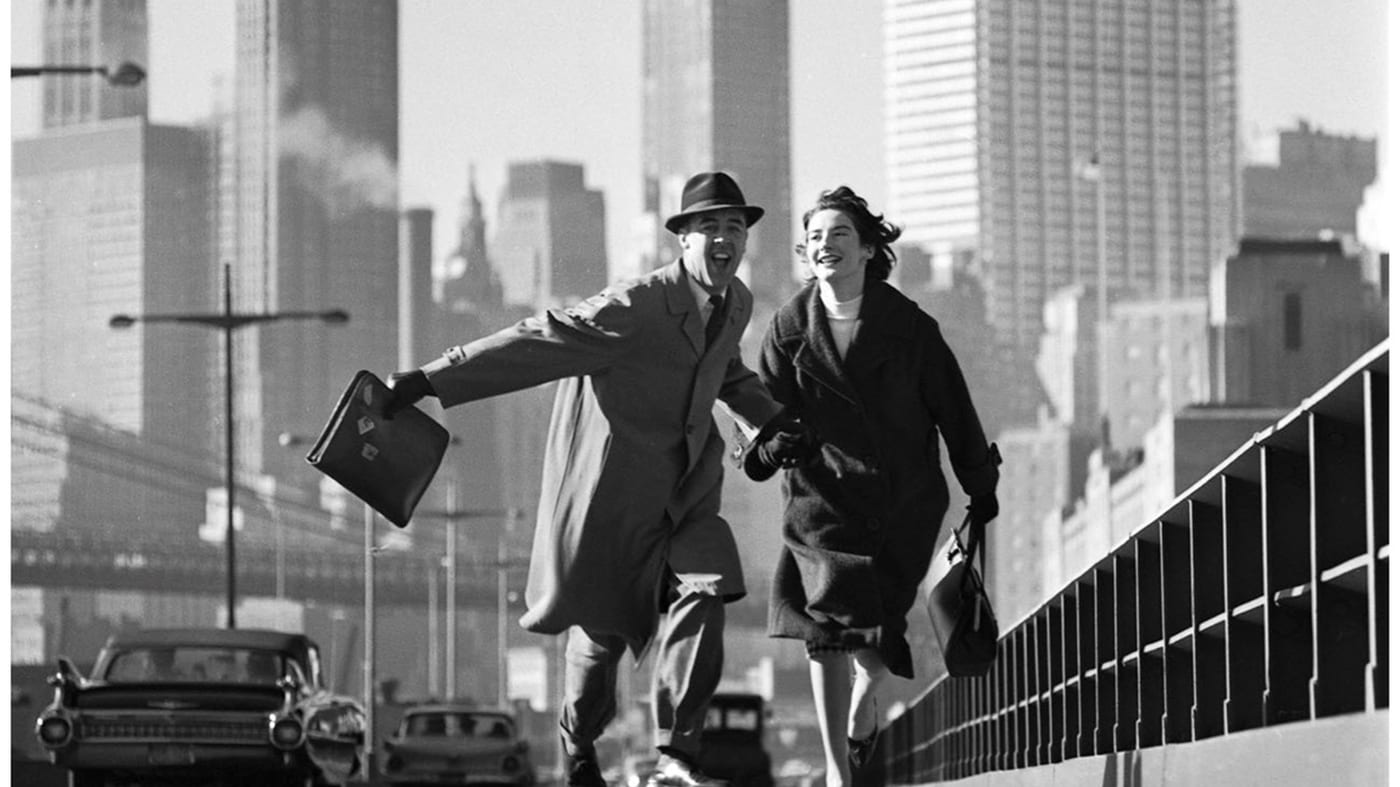
Hand in Hand - Brooklyn Bridge, Norman Parkinson
With Marc Mossé, General Counsel and Senior Director Government Affairs at Microsoft Europe, and Catherine Chevillot, Director of the Musée Rodin and heritage curator
How do we move forward effectively in a world where the pace of travel, production and decisions, and of life itself, keeps accelerating?
Speeding up, saving time, leading the race: these look like the banners of our digital society today. Every area of our lives is now caught up in a race for ever more and ever faster. We spend our time dealing with emergencies, going from meeting to meeting, emptying our inboxes, and we come out of it emptied ourselves. Being forced to speed up for the sole purpose of keeping one’s place affects our relationship with ourselves, with others and with the world.
Crossing the river by feeling the stones: a Chinese effectiveness
But rather than running, what if it were above all about moving forward, progressing while keeping a trusting contact with the world? Feeling the stones to cross the river calls for agility and caution. Agility, because we have to rely on footholds that may turn out to be slippery and be ready to change them. Caution, because it is no longer about running but about finding points of support to reach our goals more effectively.
Not everyone has the desire or the ability to run; on the other hand, everyone wants to move forward while staying in touch with people and things, with matter and spirit, like a sculptor giving form and life to their work.
Having the courage to stop, to start again and to yield to no time pressure As Catherine Chevillot, Director of the Musée Rodin, points out, “Rodin’s works are representations of a moment; they render successive movements. Like Auguste Rodin, we must know how to bring the hazards of time into what we accomplish.” Managing to be seized by what comes, not by what I plan. Auguste Rodin took seven years to complete the “Monument to Balzac” (1897), a length of time essential to the artist, who found new inspiration not by innovating but by drawing on what had already been done. Abandoning the idea of a lifelike portrait, he made the very essence of sculpture, modelling, the central element of the representation again. Rodin took the Time of Creation by considering the Time of the Gaze. He sculpted Motion, to bring Emotion out of it.
I run and run… what if I took up theatre? That is what Marc Mossé, General Counsel at Microsoft Europe, did, adding theatre to his leader’s schedule. This new activity gives him a new breath. “For a long time I believed that part of my professional achievement depended on constant acceleration. It seemed irrational to give myself time when I was already short of it. Yet I am realising that this time for myself does not affect my effectiveness at work. On the contrary, I now focus on what matters; I am able to stop so as to throw myself into my projects all the better.” What if I took a little respite?
In Old French, “respiter” means to give oneself respite, to grant oneself a pause to step out of the race. Curiously, the verb has disappeared from the French language! Stopping to look at what we have done, considering with respect those who speak to us, resting a little: catching our breath.