Art and innovation
What Do the Chinese Think When They Look at The Fall of Icarus?
Where does creativity come from? How do we spark innovation? Should we transgress or, on the contrary, stay within a frame?
Where does creativity come from? How do we spark innovation? Should we transgress or, on the contrary, follow in others’ wake?
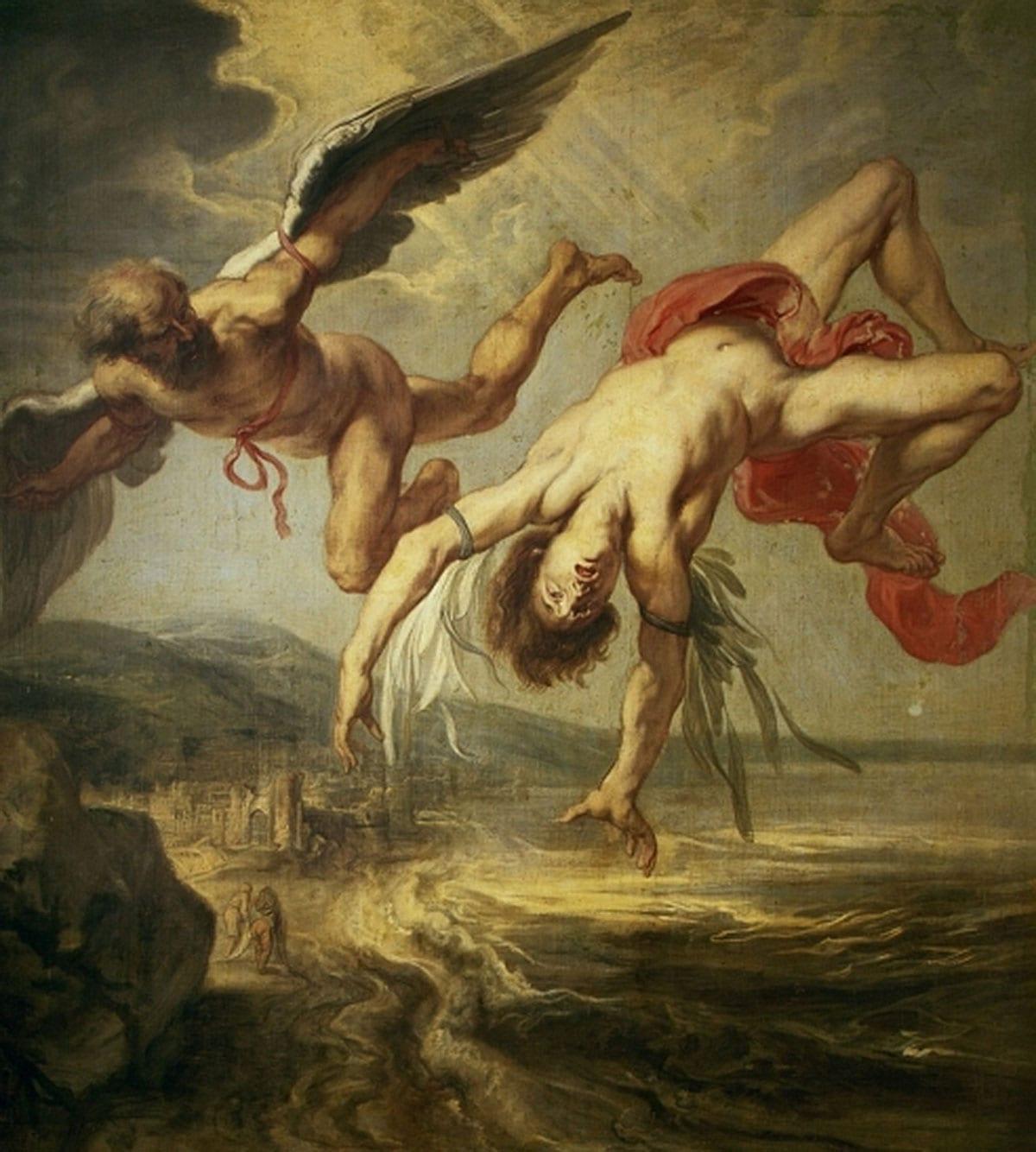
The Fall of Icarus by Peter Paul Rubens, 1636
Back to Greek mythology
Daedalus, architect of the labyrinth, and his son Icarus must flee Crete, but neither land nor sea offers them a way out.
With only the air left, they make themselves wings of wax and feathers.
But Icarus ignores his father’s advice (“fly neither too high nor too low”) and, spellbound, flies too close to the sun.
His wings melt… He falls before his father’s helpless eyes…
The art of transgression
For Professor WU, Icarus stands for the art of transgression because, by contrast, the Chinese character tends towards measure, remaining in a kind of detachment and restraint.
Icarus does not listen to his father; he is free, he is not just “the son of”, he listens to his own desire.
Because we have our Icaruses, we have our Picassos…
There is a tragic quality in Icarus of utterly incomparable beauty.
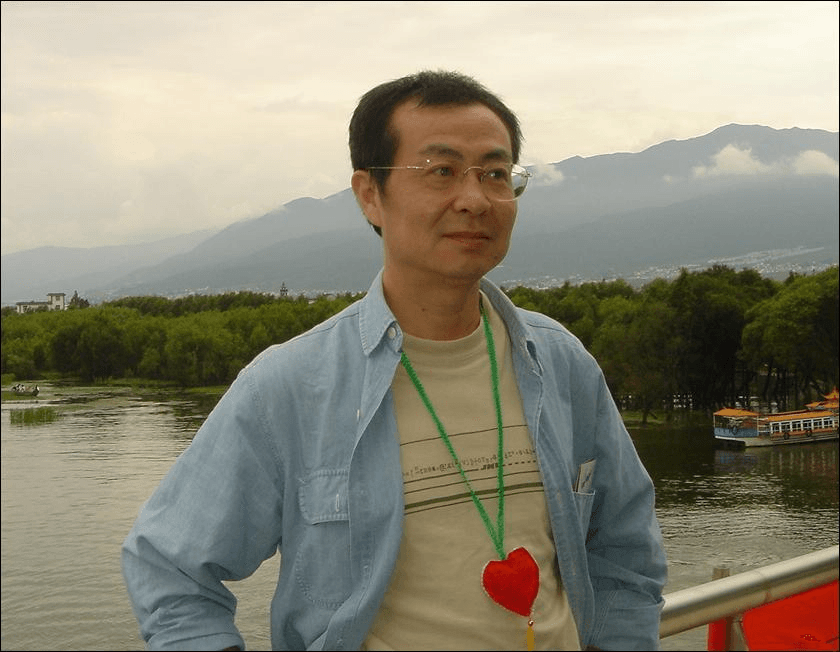
Professor WU Hongmiao
Wuhan University, China
An unbearable and shocking relationship to the father
A Chinese person is first of all a son or a daughter. In China, the family name comes before the given name.
You are above all a member of a clan, a network, a circle that places you in relation to others.
One of Confucius’s first principles, alongside benevolence (shèng), is filial piety (xiào).
What you owe society first is obedience to your parents, your grandparents, your ancestors and so to those in power. You must first submit to an order that already exists.
By contrast, the power of an Icarus lies in transgression. It is a source of freedom, of creation and of possible innovation.
Kuafu chasing the sun: a Chinese Icarus
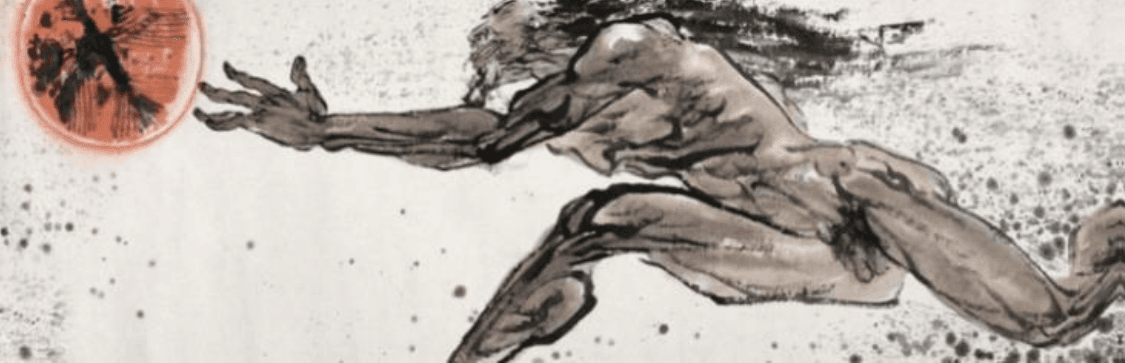
In this thousand-year-old legend, Kuafu suffers from the lack of light on Earth and sets off in pursuit of the sun.
The story never places the sun above, but always ahead. Depictions of Kuafu show a sun that is always at the same level, as if it were there to be seized.
Unlike Icarus, we are not in transcendence here. It is not about ascending, going higher, but about going further, towards…
A collective quest as a driver of creation
Kuafu fails to catch the sun and dies.
But from his failure the world is reborn, scattered with peach trees in blossom, a river… There is re-creation.
With Kuafu, there is no relationship to transgression. He chases the sun for his fellow beings, in a collective quest.
His unshakeable determination in the face of obstacles leads to the creation of a new world, despite his failure.
Two cultures, two visions of creation
Icarus represents a Western interpretation of creation. The individual seeks to rise, to lift themselves beyond their condition and their destiny. To create, then, one must transgress, break with the norms and rules that restrict our actions.
Kuafu offers us a Chinese interpretation of creation. The individual has, above all, a duty towards their parents and their community. Creation is born of perseverance and of pursuing our duty, even if it ends in failure.
A blog post based on the talk À quoi pensent les Chinois en regardant Mona Lisa ? by Christine Cayol, founder and president of Synthesis.